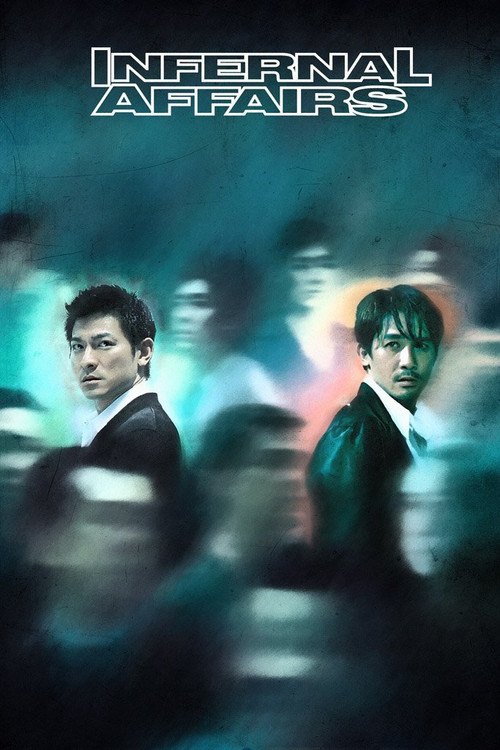
Infernal Affairs (2003)
Two Men Who Lost Their Identities Meet in Hell
by 10days1movie · Published 2026-11-14
| Type | Movie |
|---|---|
| Director | Andrew Lau, Alan Mak |
| Cast | Tony Leung, Andy Lau, Anthony Wong |
| Release | 2003 |
| Genre | Drama, Crime, Thriller |
| Runtime | 101min |
This is the work that made a Hong Kong film industry, then judged to be in a slump, draw the world’s attention again. With a single mirror-like premise of a gang member infiltrating the police and a cop infiltrating the gang, Infernal Affairs set a new standard for noir that wins through psychology rather than action. The mere fact that it is the original Martin Scorsese remade as The Departed to win an Academy Award lets you sense its weight, and it is a work that fully earns its three and a half stars.
What it’s about — Two infiltrators planted on opposite sides
The Triads long ago enroll a young member, Lau Kin-ming (Andy Lau), in the police academy to raise him as a mole inside the force. Around the same time, the police infiltrate Chan Wing-yan (Tony Leung) into the gang to use him as an informant. After ten years pass, one has become a capable police officer and the other a trusted subordinate in the gang. As the fact that each side has a mole becomes known to both, the two men are placed in a position of having to expose the other’s identity while hiding their own. The fight over who finds the other first pulls the entire film taut.
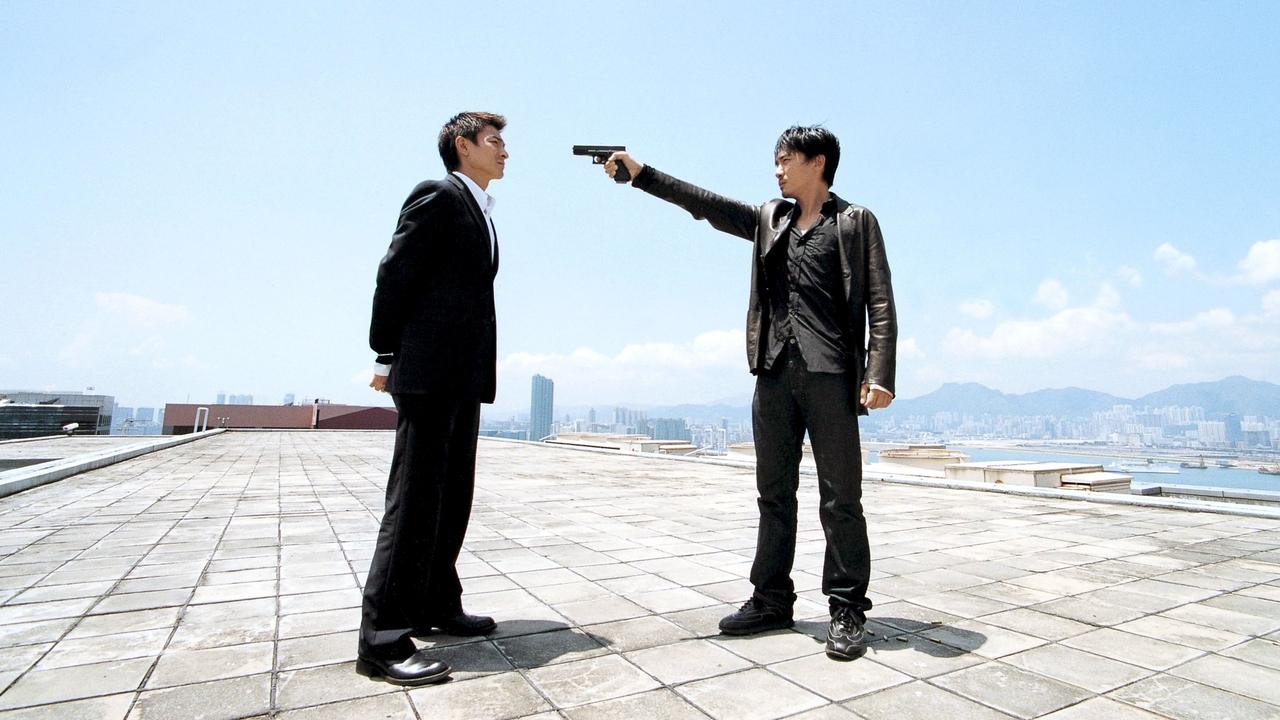
Direction — Tension tightened by silence rather than gunfire
Andrew Lau and Alan Mak boldly reduce the flashy shootouts typical of Hong Kong noir and shift the center of gravity to information warfare and psychological warfare. The conversation scenes unfolding in everyday spaces like a rooftop, an office, or an audio-equipment shop are the ones that grip you most. Small details like fingers tapping out Morse code, the silence on the other end of a phone, and eyes sizing each other up create enormous tension. The city’s cold color palette and restrained editing visually support the isolation of the two figures. If you watch expecting action you may find it surprising, but it is precisely that restraint that sets this film apart from other noir.
Performance — Two masked faces, Tony Leung and Andy Lau
The film’s real strength comes from the faces of its two leads. Tony Leung conveys the fatigue and loneliness of Chan Wing-yan, living with his identity hidden, through expression alone with almost no dialogue. The desperation of a man with no way to prove who he is rests fully in his eyes. Andy Lau, on the opposite side, solidly draws the anxiety of Lau Kin-ming, who wants to settle into the life of an ordinary cop but cannot escape a past that will not let him go. The brief moments when the two come face to face are the most intense scenes in the film. The heavy presence of Inspector Wong, played by Anthony Wong, also props up the story dependably.

What the film says — The meaning of a title about unending suffering
The title Infernal Affairs comes from the deepest hell in Buddhism, the Avici hell where suffering continues without end. Both protagonists live unable to say who they are. Chan Wing-yan is a cop yet cannot be a cop, and Lau Kin-ming has become a cop yet can never erase the gang’s shadow. The film draws not a simple contest of good and evil but the endless self-negation suffered by people who have lost their identity. One wants to reclaim his real name, the other wants to erase his past and become a new person. At the place where those two desires collide, the film grants neither side an easy salvation.
Ratings & reception
Its IMDb score is very high at 8.0, and its Rotten Tomatoes freshness is 94%. Its Metacritic score is 75. At the time of release it was hailed as a work that breathed vitality into a sluggish Hong Kong film industry, and it completed a noir trilogy with two sequels. When Martin Scorsese remade it as The Departed and won the Academy Award for Best Picture and Best Director, the original’s solidity was once again confirmed worldwide.

Verdict
Infernal Affairs is a film that wins through density rather than flash. The choice to focus on the characters’ inner lives over the volume of shootouts made this work a noir that does not fade with time. The two actors Tony Leung and Andy Lau deliver peak skill, drawing deep tragedy from a simple premise. The craft of pulling tension along without any excess within a not-long 101 minutes is also exquisite. As a work that closed one era of Hong Kong noir and opened a new one, it stands in a place anyone who loves crime drama must pass through. 3.5 stars.
Recommended for
- Those who like noir centered on psychological warfare over action
- Those who want to see Tony Leung and Andy Lau’s performances in depth
- Those curious about the original behind The Departed
Comments